Building Structural Repair & Rehabilitation: Complete Guide for Housing Societies in Mumbai
Building structural repair and rehabilitation is essential for maintaining the safety, durability and serviceability of ageing residential buildings. For cooperative housing societies in Mumbai, Thane and Navi Mumbai, timely structural maintenance helps address concrete deterioration, reinforcement corrosion, water leakage and damage to load-bearing elements.
Many residential buildings experience cracks, concrete spalling, balcony deterioration, terrace leakage and reinforcement corrosion as they age. While some defects may initially appear minor, continued exposure to moisture, environmental conditions and inadequate maintenance can lead to more extensive deterioration.
Housing society managing committees are often responsible for coordinating structural audits, reviewing repair recommendations, obtaining quotations, appointing contractors and supervising rehabilitation projects.
This guide explains the complete building structural repair process in Mumbai, including structural audits, common repair techniques, budgeting, contractor selection and quality control.
1. What Is Building Structural Repair and Rehabilitation?
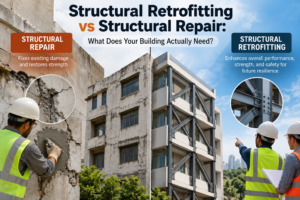
Structural repair refers to restoring damaged or deteriorated structural components so they can perform their intended functions in accordance with engineering requirements.
Structural rehabilitation involves a more comprehensive programme of repairing, restoring and, where necessary, strengthening existing buildings to improve their performance, durability and serviceability.
Typical Structural Rehabilitation Works
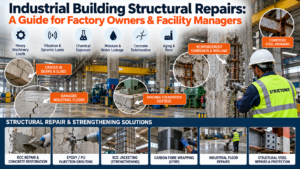
- RCC column and beam repairs
- Concrete slab and balcony restoration
- Reinforcement corrosion treatment
- Concrete spalling and delamination repairs
- Crack repairs and injection grouting
- Structural strengthening and RCC jacketing
- Terrace and external wall waterproofing
- Repair of deteriorated chajjas and projections
- Repair of damaged structural concrete in parking areas
- Protective treatments and durable finishing systems
Important: Structural rehabilitation is different from cosmetic renovation. Painting, replastering or covering damaged concrete does not resolve underlying structural deterioration.
2. Why Do Housing Society Buildings in Mumbai Deteriorate?
Mumbai and the surrounding coastal region experience environmental conditions that can accelerate deterioration of reinforced concrete buildings.
2.1 Reinforcement Corrosion
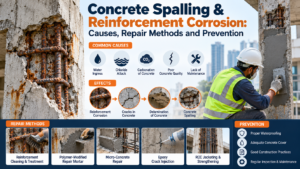
Corrosion of embedded steel reinforcement is one of the important causes of RCC deterioration. Moisture, carbonation and chloride exposure can contribute to corrosion where the concrete protection is compromised.
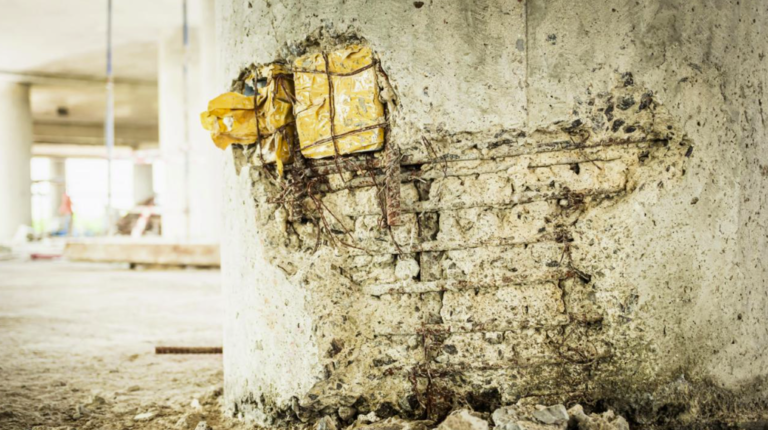
Expansive corrosion products can create internal pressure, leading to cracking, delamination and concrete spalling.
2.2 Water Leakage and Seepage
Persistent water leakage from terraces, bathrooms, balconies, plumbing lines and external walls can accelerate concrete deterioration.
Water-entry sources should be identified and rectified as part of the rehabilitation programme to reduce the risk of recurring damage.
2.3 Ageing Concrete and Material Deterioration
Over time, exposure, repeated wetting and drying, environmental conditions and maintenance deficiencies may affect the durability of concrete structures.
2.4 Poor Construction Quality
Inadequate concrete cover, poor compaction, honeycombing, insufficient curing or improper construction detailing may contribute to premature deterioration.
2.5 Structural Alterations and Additional Loads
Unauthorised alterations, removal of structural elements, additional equipment loads or changes in building usage may affect the original structural system.
Such conditions require engineering review before strengthening or repair works are undertaken.
3. Common Signs That a Housing Society Building Needs Structural Repairs
Housing society committees and property managers should monitor visible building defects and arrange professional evaluation when structural deterioration is suspected.
Important Warning Signs
- Cracks in RCC beams, columns, slabs or load-bearing walls.
- Concrete pieces falling from balconies, chajjas or external projections.
- Rust stains or exposed reinforcement in concrete members.
- Hollow-sounding or delaminated concrete.
- Persistent leakage through terraces, walls or structural slabs.
- Visible sagging, excessive deflection or unusual structural movement.
- Repeated failure of previously repaired areas.
These observations do not independently establish the structural safety or stability of a building. A qualified structural engineer should assess their significance.
Where sudden structural movement, falling concrete or possible collapse is suspected, restrict access to the affected area and seek urgent assistance from qualified professionals and relevant authorities.
4. Structural Audit Requirements for Housing Societies in Mumbai
Structural audits play an important role in evaluating the condition of existing residential buildings and identifying necessary corrective repairs.
The applicable audit requirements depend on the building's location, age, adopted cooperative housing society bye-laws and current municipal regulations.
Typical Structural Audit Intervals
The Maharashtra cooperative housing society model bye-laws commonly referenced for structural audits specify the following intervals:
| Building Age | Referenced Audit Frequency |
|---|---|
| 15 to 30 years | Once every 5 years |
| More than 30 years | Once every 3 years |
Separately, Section 353B of the Mumbai Municipal Corporation Act provides for structural stability certification of buildings reaching 30 years of age, with subsequent certification requirements under that provision.
Compliance Note: These are different regulatory requirements. Societies should verify the latest applicable municipal provisions, adopted bye-laws, professional empanelment requirements and any specific notices issued by the local authority before scheduling an audit.
A structural audit should be conducted by a suitably qualified and authorised structural professional. Repairs should follow the approved findings and recommendations of the appointed engineer.
5. Complete Building Structural Repair Process
A systematic rehabilitation programme helps housing societies define the scope, evaluate contractor quotations and execute repairs with appropriate quality and safety controls.
-
Initial Building Inspection
Identify visible cracks, concrete spalling, corrosion, leakage, damaged projections and other deterioration in accessible areas. -
Structural Audit and Engineering Assessment
The appointed structural engineer reviews the building condition, available drawings, repair history and structural concerns. Further testing may be recommended. -
Repair Scope and Technical Specifications
Prepare repair recommendations, drawings, methods, materials, quantities and technical specifications based on the assessment findings. -
Preparation of BOQ and Tender Documents
Develop an itemised Bill of Quantities identifying repair items, units, estimated quantities, material requirements and measurement procedures. -
Contractor Selection and Award
Compare technical capability, experience, repair methodologies, commercial rates, safety provisions and contract conditions. -
Mobilisation and Safety Arrangements
Arrange access systems, scaffolding, barricading, debris protection, resident communication and suitable safety measures. -
Concrete Repairs and Structural Strengthening
Execute approved concrete removal, reinforcement treatment, restoration, injection grouting and strengthening works according to the specified methodology. -
Waterproofing and Protective Treatments
Address applicable water-entry sources, install compatible waterproofing systems and complete specified protective finishes. -
Quality Checks and Completion Documentation
Conduct inspections, material checks, measurements and applicable testing. Record completed works and rectify identified deficiencies. -
Handover and Maintenance Planning
Complete snag rectification, obtain required professional certifications where applicable, and implement a preventive maintenance programme.
6. Common Structural Repair Methods Used in Building Rehabilitation
The repair system should be selected based on structural assessment findings, exposure conditions, repair objectives and the approved specifications.
6.1 Polymer-Modified Mortar Repairs
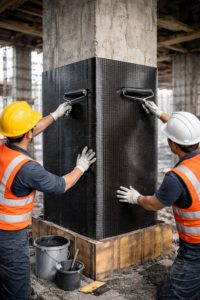
Polymer-modified cementitious repair mortars may be used for localised restoration of damaged or spalled concrete after suitable surface preparation and reinforcement treatment.
6.2 Micro-Concrete Repairs
Flowable, non-shrink or shrinkage-compensated micro-concrete systems may be specified for suitable larger-volume repairs where conventional hand-applied mortars are impractical.
6.3 Reinforcement Corrosion Treatment
Damaged concrete is removed as specified, exposed reinforcement is examined and cleaned, and suitable corrosion protection systems are applied where required. Additional or replacement reinforcement must follow the approved engineering design.
6.4 Epoxy and PU Injection Grouting
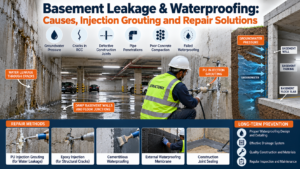
Epoxy injection may be used for suitable dormant concrete cracks where structural bonding is specified. PU injection systems are commonly used for controlling water leakage through suitable cracks and joints.
The selection depends on crack movement, moisture conditions and the intended performance of the treatment.
6.5 RCC Jacketing
RCC jacketing involves strengthening existing structural members by introducing additional reinforced concrete according to engineered strengthening details.
6.6 CFRP Strengthening
Carbon Fibre Reinforced Polymer systems may be used for strengthening suitable beams, columns and slabs where specified by a qualified structural engineer.
6.7 Waterproofing and Protective Coatings
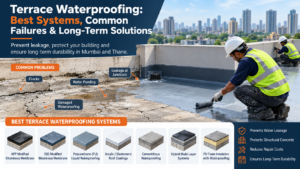
Appropriate waterproofing membranes, cementitious systems, liquid-applied coatings and compatible protective finishes may be installed to help control future moisture ingress and improve durability.
7. How Much Does Building Structural Repair Cost in Mumbai?
The cost of structural repair and rehabilitation varies considerably between housing society buildings. A reliable estimate should be based on the actual repair quantities, technical specifications and site conditions rather than building age or external appearance alone.
Major Factors Affecting Repair Cost
- Extent and severity of concrete deterioration
- Number and condition of RCC structural members
- Requirement for strengthening or jacketing
- Building height and accessibility
- Scaffolding and working platform requirements
- Repair materials and approved specifications
- Waterproofing and leakage rectification scope
- Occupied-building safety and access restrictions
- Testing, supervision and quality requirements
- Hidden deterioration identified during execution
Recommended BOQ Format
| Work Category | Typical Measurement Unit |
|---|---|
| Concrete breaking and removal | m² or m³, as specified |
| Reinforcement treatment | m², running metre or item |
| Polymer mortar repairs | m² or m³, with repair thickness defined |
| Micro-concrete restoration | m³ |
| Epoxy / PU injection grouting | Running metre or specified item |
| RCC jacketing | Itemised concrete, reinforcement and formwork |
| Terrace waterproofing | m² |
| External wall repairs and coating | m² |
| Scaffolding and access arrangements | m², duration-based or lump sum |
Housing societies should request itemised, technically comparable quotations rather than rely only on a consolidated lump-sum price.
Each quotation should clearly identify the scope, measurement rules, exclusions, material specifications, quantities and contractual conditions.
Budgeting Recommendation: Include a properly controlled contingency for concealed deterioration that may become visible after removal of unsound concrete. Additional work should be approved and documented through the agreed variation procedure.
8. How to Select a Structural Repair Contractor for Your Housing Society
Selecting the right structural repair contractor is one of the most important decisions for a housing society rehabilitation project.
Key Contractor Evaluation Criteria
- Relevant experience in occupied-building structural repairs and rehabilitation.
- Technical understanding of RCC repair methodologies and materials.
- Capability to execute the approved structural engineer's specifications.
- Experienced site engineers, supervisors and trained personnel.
- Appropriate scaffolding, access and safety arrangements.
- Transparent itemised quotations and measurement procedures.
- Material documentation and quality control processes.
- Clear project duration, milestones and contractual responsibilities.
- Defined defect liability and workmanship obligations.
Questions the Society Should Ask Contractors
- Have you completed similar occupied housing society rehabilitation projects?
- Will the works follow the appointed structural engineer's repair specifications?
- Which repair systems and materials are proposed?
- How will concrete repair quantities be measured and certified?
- What arrangements will protect residents and common areas?
- How will additional repair quantities be approved?
- What quality documentation and completion records will be provided?
A technically evaluated contractor with a clearly defined scope offers a more reliable basis for selection than the lowest quoted price alone.
9. Managing Structural Repair Works in an Occupied Housing Society
Rehabilitation works often take place while residents continue to occupy the building. This requires detailed planning and communication.
Important Execution Considerations
- Communicate the work programme and affected areas to residents.
- Barricade work zones and restrict access below overhead activities.
- Provide suitable scaffolding and fall protection measures.
- Protect entrances, parked vehicles, windows and surrounding property.
- Control dust, noise and debris during concrete removal.
- Coordinate temporary service interruptions where necessary.
- Maintain daily site records, progress photographs and measurements.
- Arrange inspections and approvals before covering completed repair stages.
Any temporary propping, load restrictions or evacuation requirements must be determined by appropriately qualified professionals based on actual site conditions and structural risks.
10. Repair, Retrofitting or Redevelopment: What Should a Housing Society Choose?
Housing societies sometimes face uncertainty about whether to repair an ageing building, undertake strengthening or explore redevelopment.
| Option | Typical Purpose |
|---|---|
| Structural Repair | Restore damaged or deteriorated structural components. |
| Structural Rehabilitation | Implement a coordinated programme of restoration, protection and necessary repairs. |
| Structural Retrofitting | Improve structural performance according to an engineered strengthening design. |
| Redevelopment | Replace the existing building through a separate statutory, technical and commercial process. |
The decision should consider structural condition, feasibility, expected service life, statutory requirements, available finances and the needs of society members.
A qualified structural engineer should advise on the building's condition and technical repair feasibility. Redevelopment decisions additionally require appropriate legal, financial and planning evaluation.
11. How Structonix Supports Building Structural Rehabilitation
Structonix provides specialised structural repair, rehabilitation, concrete restoration and strengthening execution services for residential, commercial and industrial buildings.
Our work focuses on implementing appropriate repair methodologies using compatible repair materials, careful substrate preparation and documented workmanship.
Our Services for Housing Societies
- RCC column and beam repairs
- Concrete spalling and patch restoration
- Reinforcement corrosion treatment
- Balcony, slab and chajja repairs
- Crack repairs and injection grouting
- RCC jacketing and structural strengthening
- CFRP strengthening systems
- Terrace and external wall waterproofing
- Concrete protection and rehabilitation works
Where structural assessment, design, audit certification or stability certification is required, work should be undertaken in accordance with the recommendations and approved specifications of a qualified structural engineer.
We consider suitable project requirements across Mumbai, Thane, Navi Mumbai and surrounding areas of Maharashtra.
12. Frequently Asked Questions
What is structural rehabilitation of a housing society building?
Structural rehabilitation is a planned programme to repair deteriorated concrete, address corrosion and leakage, restore damaged structural components and carry out strengthening where required by engineering assessment.
Is a structural audit mandatory for housing societies in Mumbai?
Structural audit and certification requirements may apply under the Maharashtra cooperative housing society bye-laws and applicable municipal laws. Societies should confirm the current requirements for their building, including age-based intervals and any municipal notices.
How long does building structural repair work take?
The duration depends on the building size, repair quantities, structural condition, access requirements, available working areas and project scope. A detailed work programme should be prepared after the repair requirements are established.
Can residents stay in the building during structural repairs?
Many repair projects can be executed in occupied buildings with suitable safety arrangements. However, occupancy restrictions or temporary evacuation may be necessary where a qualified structural engineer identifies unacceptable risks.
How is the structural repair cost of a housing society calculated?
Repair costs are calculated from the approved scope, itemised BOQ, measured quantities, material specifications, access arrangements, labour, equipment and contractual requirements.
Is RCC jacketing required for every damaged building?
No. RCC jacketing is a structural strengthening technique used when justified by engineering assessment and design. Many deterioration problems may be addressed through suitable repair systems without jacketing.
What documents should a society obtain after completion of repairs?
Depending on the contract and regulatory requirements, documents may include measurement records, material details, inspection reports, test results, warranties, completion records and applicable certificates from authorised professionals.
Does Structonix undertake building structural repair in Mumbai and Thane?
Structonix provides specialised structural repair and rehabilitation execution services for suitable residential, commercial and industrial projects in Mumbai, Thane, Navi Mumbai and nearby service areas.
13. Conclusion
Building structural repair and rehabilitation should be treated as a planned engineering and maintenance activity rather than a purely cosmetic renovation.
For housing societies in Mumbai, a systematic approach beginning with professional structural assessment, followed by defined repair specifications, transparent contractor selection and quality controlled execution, can help protect building durability and maintain serviceability.
Early action, proper planning and effective maintenance can help societies manage deterioration before repair requirements become more extensive.