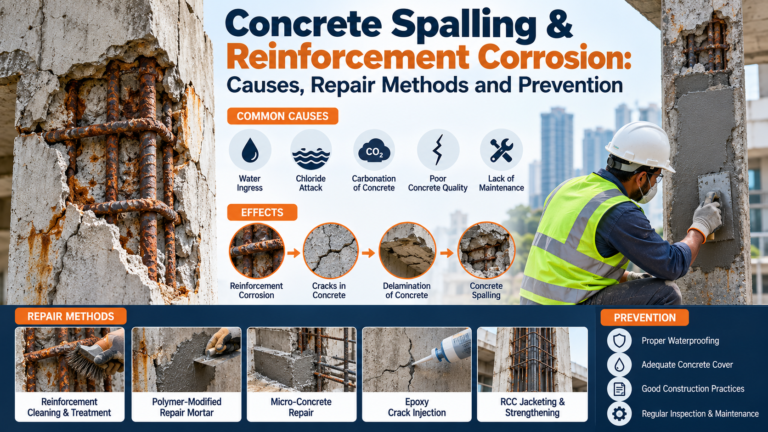
Concrete Spalling & Reinforcement Corrosion: Causes, Repair Methods and Prevention
Concrete spalling and reinforcement corrosion are among the most common causes of deterioration in reinforced cement concrete (RCC) structures. They can affect residential buildings, housing societies, commercial properties, industrial facilities and infrastructure structures.
Cracking, rust stains, loose concrete and exposed steel reinforcement are frequently observed in ageing buildings. Although these problems may initially appear to affect only the concrete surface, they can indicate deeper deterioration that requires professional investigation.
In Mumbai, Thane and Navi Mumbai, heavy monsoon rainfall, coastal environmental exposure, persistent moisture and inadequate maintenance can contribute to reinforcement corrosion and progressive concrete deterioration.
Effective concrete spalling repair involves more than replacing damaged concrete. The underlying deterioration mechanism must be identified, the reinforcement condition assessed and suitable repair materials selected.
This guide explains the causes of concrete spalling, how reinforcement corrosion develops, common RCC repair methods, inspection procedures and preventive measures for long-term concrete durability.
1. What Is Concrete Spalling?
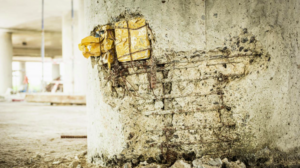
Concrete spalling refers to the breaking, flaking or separation of concrete from the surface or body of a concrete member.
It may occur in RCC beams, columns, slabs, balconies, chajjas, parapets and other structural or non-structural concrete elements.
Spalling can result from reinforcement corrosion, mechanical impact, fire exposure, freeze-thaw deterioration in applicable climates, poor concrete quality or other physical and chemical deterioration mechanisms.
Common Visible Signs of Concrete Spalling
- Loose or detached concrete fragments
- Cracks running along embedded reinforcement
- Rust-coloured stains on concrete surfaces
- Exposed steel reinforcement
- Delaminated or hollow-sounding concrete
- Progressive loss of concrete cover
- Repeated deterioration of previously repaired areas
Important: Concrete spalling does not automatically establish that a structure is unsafe. However, falling concrete can present an immediate hazard, and damage to structural members may affect their durability or load-bearing performance.
2. What Is Reinforcement Corrosion in RCC Structures?
Reinforcement corrosion is the deterioration of embedded steel reinforcement through electrochemical reactions under conditions that permit corrosion to occur.
In sound alkaline concrete, steel reinforcement is normally protected by a passive surface film.
When this protection is disrupted, particularly through carbonation or chloride contamination, corrosion can begin in the presence of sufficient moisture and oxygen.
How Reinforcement Corrosion Causes Spalling
- Loss of Steel Protection: Carbonation or chloride ingress may compromise the passive protection of embedded reinforcement.
- Corrosion Initiation: Under suitable moisture and oxygen conditions, the steel begins to corrode.
- Formation of Corrosion Products: Rust products occupy a greater volume than the original steel consumed by corrosion.
- Internal Expansion: Expansive corrosion products generate stresses within the surrounding concrete.
- Cracking and Delamination: Cracks form or propagate, and concrete cover may separate from the substrate.
- Concrete Spalling: Deteriorated cover concrete can detach, exposing reinforcement and accelerating further deterioration.
Corrosion can also reduce the effective steel cross-sectional area and affect reinforcement bond with surrounding concrete.
Where substantial section loss or damage is suspected, a qualified structural engineer must assess the implications for structural capacity.
3. Major Causes of Concrete Spalling and Reinforcement Corrosion
3.1 Carbonation of Concrete
Carbonation occurs when atmospheric carbon dioxide reacts with alkaline components of hardened concrete.
This process can reduce concrete alkalinity. If the carbonation front reaches the reinforcement, the protective passive film may become unstable.
Corrosion may then develop where adequate moisture and oxygen are present.
3.2 Chloride Contamination
Chloride ions can penetrate concrete through environmental exposure, contaminated materials or other sources.
Chlorides can disrupt the passive protection of embedded steel and contribute to localised reinforcement corrosion.
Coastal buildings and structures exposed to chloride-containing environments require particular attention to concrete durability.
3.3 Inadequate Concrete Cover
Concrete cover provides physical and chemical protection to embedded reinforcement.
Insufficient cover can reduce resistance to carbonation and chloride penetration, contributing to earlier corrosion initiation.
3.4 Water Leakage and Seepage
Persistent leakage from terraces, bathrooms, balconies, external walls and plumbing systems can expose concrete to repeated moisture ingress.
Where corrosion conditions are present, continued moisture exposure can accelerate deterioration.
3.5 Poor Concrete Quality
Highly permeable concrete, inadequate compaction, honeycombing, improper curing and construction defects can reduce the protective performance of concrete.
3.6 Cracks and Construction Defects
Certain cracks and defective construction joints can provide pathways for moisture and aggressive substances to reach reinforcement.
The significance of a crack depends on its location, width, depth, movement and exposure conditions.
3.7 Lack of Preventive Maintenance
Delayed repair of damaged waterproofing, blocked drainage, deteriorated coatings and repeated leakage can allow corrosion-related deterioration to progress.
4. Concrete Spalling vs Reinforcement Corrosion: Key Differences
| Parameter | Concrete Spalling | Reinforcement Corrosion |
|---|---|---|
| Definition | Breaking or detachment of concrete material. | Electrochemical deterioration of embedded steel. |
| Typical Signs | Loose concrete, delamination and exposed aggregate. | Rust staining, longitudinal cracking and reinforcement loss. |
| Common Causes | Corrosion, impact, deterioration or other damage mechanisms. | Loss of passivity, moisture and oxygen. |
| Possible Effects | Loss of concrete cover and falling fragments. | Steel section loss, cracking and reduced bond. |
| Repair Approach | Remove unsound concrete and restore the section. | Investigate and address corrosion causes and reinforcement condition. |
Reinforcement corrosion is an important cause of concrete spalling, but not all spalling is caused by corrosion.
Similarly, reinforcement may experience corrosion before visible concrete spalling develops.
5. Warning Signs That Require Professional Inspection
Building owners and facility managers should arrange professional evaluation when concrete deterioration is observed, particularly in structural members.
Important Concrete Deterioration Indicators
- Falling concrete from balconies or chajjas
- Large areas of loose or delaminated concrete
- Exposed and visibly corroded reinforcement
- Cracks extending along RCC beams or columns
- Repeated damage after earlier concrete repairs
- Noticeable deformation or distress of structural members
- Concrete deterioration affecting critical load-bearing locations
If concrete fragments are falling or may fall, access beneath the affected area should be restricted immediately.
Where significant structural distress, sudden movement or possible instability is suspected, obtain urgent assistance from qualified structural professionals and the relevant authorities.
Do not remove substantial quantities of concrete from a load-bearing member before the need for temporary support and safe repair sequencing has been evaluated.
6. How Are Concrete Spalling and Corrosion Assessed?
A proper investigation helps establish the extent of damage and determine an appropriate repair methodology.
Typical Inspection and Testing Methods
Visual Inspection and Damage Mapping
Record cracking, corrosion staining, exposed steel, moisture penetration, spalling and other observable defects across affected members.
Delamination Survey
Suitable sounding or other assessment methods may help locate areas of delaminated concrete that are not yet visibly detached.
Concrete Cover Survey
Cover meters may be used to assess the approximate position of reinforcement and concrete cover.
Carbonation Depth Testing
Testing may be recommended to evaluate the depth of carbonation relative to embedded reinforcement.
Chloride Content Testing
Laboratory testing of appropriate concrete samples may be used to assess chloride contamination where relevant.
Corrosion Potential Assessment
Half-cell potential measurements and other corrosion investigations can provide useful information about corrosion likelihood under appropriate conditions. Such measurements do not directly quantify steel section loss.
Concrete Strength and Integrity Testing
Rebound hammer, ultrasonic pulse velocity, core testing or other appropriate methods may be specified by the appointed engineer.
Testing requirements should be selected according to actual site conditions and engineering objectives.
7. Step-by-Step Concrete Spalling Repair Procedure
A durable concrete repair requires correct preparation, suitable repair materials and workmanship compatible with the existing structure.
The following sequence is illustrative. Actual repair boundaries, excavation depth, reinforcement treatment and construction sequence must follow the approved repair specification.
- Inspection and Repair Planning: Identify the damaged areas, assess their condition and establish a suitable repair methodology. Confirm whether temporary support or access restrictions are necessary.
- Marking Repair Boundaries: Identify the concrete areas requiring removal based on visible damage and applicable investigation.
- Removal of Unsound Concrete: Carefully remove loose, contaminated or delaminated concrete to the extent specified in the repair methodology. Avoid unnecessary damage to reinforcement and sound surrounding concrete.
- Reinforcement Exposure and Assessment: Expose reinforcement as required by the approved specification and assess visible corrosion, section loss and bond conditions.
- Reinforcement Cleaning and Treatment: Remove corrosion products using suitable methods and apply the specified protection system where required.
- Reinforcement Replacement or Addition: Where reinforcement section loss is significant, additional or replacement bars must be detailed and approved by the structural engineer.
- Surface Preparation: Prepare the concrete interface to provide the required surface profile, cleanliness and moisture condition for the repair system.
- Application of Repair Material: Restore the concrete section using the specified polymer-modified mortar, micro-concrete or other approved repair material.
- Curing and Protection: Follow the required curing, temperature and protection procedures for the repair system.
- Inspection and Finishing: Check repair quality, complete specified protective coatings or waterproofing and document the completed works.
Quality Consideration: Surface preparation, reinforcement treatment, repair geometry, material compatibility and curing significantly influence repair performance.
8. Common Concrete Spalling Repair Materials and Methods
8.1 Polymer-Modified Repair Mortar
Polymer-modified cementitious repair mortars may be used for restoring damaged concrete surfaces and sections where suitable.
The selected repair material should satisfy the required strength, bonding, shrinkage, thickness and exposure characteristics.
8.2 Micro-Concrete Repair
Flowable micro-concrete systems can be used for certain larger-volume repairs where placement through formwork is appropriate.
They may be specified for suitable beam, column and other concrete restoration works.
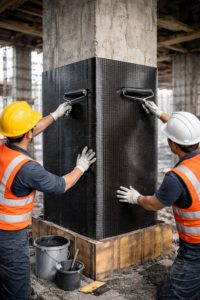
8.3 Reinforcement Corrosion Protection
Suitable corrosion protection systems may be specified for exposed reinforcement after adequate preparation.
Product selection depends on the repair specification, compatibility and corrosion mechanism.
Coatings alone may not resolve active corrosion in adjacent contaminated concrete.
8.4 Epoxy Crack Injection
Epoxy injection may be suitable for selected dormant concrete cracks where structural bonding is required.
It does not replace deteriorated reinforcement or restore concrete sections lost through spalling.
8.5 Galvanic Anodes and Corrosion Management
Proprietary galvanic anode systems may be incorporated into selected concrete repair programmes to help manage corrosion risks, particularly around repair boundaries.
Their suitability, spacing and installation requirements should be established by an appropriately qualified corrosion specialist or engineer.
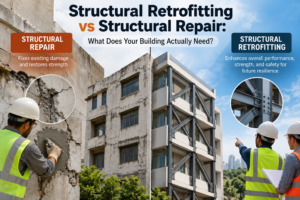
8.6 RCC Jacketing and Structural Strengthening
Where reinforcement deterioration or structural damage results in inadequate member capacity, conventional patch repairs may be insufficient.
The structural engineer may specify RCC jacketing, steel strengthening, CFRP systems or other engineered measures.
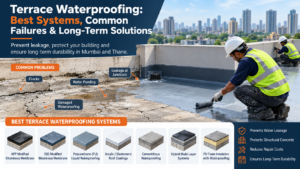
8.7 Protective Coatings and Waterproofing
Suitable concrete protection systems can help limit further exposure to moisture and aggressive substances.
Waterproofing should also be coordinated with roof drainage, external wall defects and other leakage sources.
9. Polymer Mortar vs Micro-Concrete: Which Is Better?
Both polymer-modified repair mortars and micro-concrete systems are commonly used for concrete restoration. Their suitability depends on the repair geometry, application method, structural requirements and product specification.
| Parameter | Polymer Repair Mortar | Micro-Concrete |
|---|---|---|
| Typical Application | Localised patch and section repairs | Larger formed or poured repairs |
| Placement Method | Hand-applied or product-specific method | Flowable placement with suitable formwork |
| Repair Geometry | Within specified layer thickness limits | Suitable for specified volume repairs |
| Formwork | May not be required for selected repairs | Commonly required |
| Key Consideration | Bond, thickness and curing | Flow, confinement and placement quality |
Neither material should be selected solely on compressive strength. Compatibility with the existing concrete, application conditions and long-term performance is important.
10. Why Do Concrete Repairs Fail Prematurely?
Concrete repair failure can result from inadequate diagnosis, preparation, material selection or application procedures.
Common Concrete Repair Mistakes
- Applying mortar over loose or weak concrete
- Failing to remove concrete affected by corrosion where necessary
- Inadequate reinforcement cleaning or preparation
- Ignoring significant reinforcement section loss
- Using incompatible repair materials
- Insufficient substrate preparation
- Improper mixing or application
- Exceeding specified repair layer thickness
- Inadequate curing and protection
- Ignoring water leakage and continuing corrosion risks
What Is the Ring-Anode Effect?
In certain corrosion-affected structures, localised concrete patch repairs can alter the electrochemical conditions around the repaired area.
Corrosion may subsequently develop or continue in adjacent reinforcement, sometimes causing deterioration around the perimeter of the repair.
This behaviour is often described as the ring-anode or incipient-anode effect.
Where relevant, corrosion risk management should be considered across the affected member, not only within the visible repair patch.
11. How to Prevent Concrete Spalling and Reinforcement Corrosion
Preventive maintenance and suitable concrete protection can help reduce deterioration risks and extend the serviceability of RCC structures.
Recommended Prevention Measures
- Maintain effective terrace, bathroom and balcony waterproofing.
- Rectify water leakage and drainage defects promptly.
- Inspect exposed RCC elements for cracking, corrosion and concrete deterioration.
- Maintain protective coatings where specified.
- Repair localised defects using appropriate technical methodologies.
- Avoid unauthorised structural alterations and excessive loading.
- Maintain records of previous repairs and recurring defects.
- Arrange structural assessments and audits in accordance with applicable requirements.
Preventive Measures for New RCC Construction
For new construction, reinforcement durability depends on appropriate concrete mix design, suitable cover, correct compaction, adequate curing, appropriate materials and exposure-specific detailing.
Where relevant, the requirements of applicable Indian Standards, including IS 456, should be considered by the project design professionals.
12. Concrete Repair for Housing Societies and Industrial Buildings
Housing Societies and Residential Buildings
Residential buildings frequently experience concrete deterioration in balconies, chajjas, external beams, columns, parking areas and roof slabs.
A systematic programme involving condition assessment, defined repair specifications and quality-controlled execution can help housing society committees manage rehabilitation works.
Commercial Buildings
Commercial building repairs may involve parking structures, service areas, exposed concrete, staircases and other RCC components.
Site planning should account for occupant access, business operations, safety and maintenance requirements.
Industrial Buildings and Factories
Industrial facilities may experience concrete deterioration associated with moisture exposure, aggressive environments, operational activities and equipment-related stresses.
Repair programmes may require controlled access, equipment protection and staged execution to reduce disruption to factory operations.
13. What Factors Affect Concrete Spalling Repair Cost?
Concrete repair costs vary considerably depending on the severity of deterioration, affected structural members, access requirements and selected repair systems.
Major Cost Factors
- Extent of damaged concrete
- Repair depth and volume
- Condition of existing reinforcement
- Requirement for additional or replacement steel
- Type of approved repair mortar or micro-concrete
- Access, scaffolding and temporary works
- Surface preparation and cleaning requirements
- Corrosion protection specifications
- Associated waterproofing and protective coatings
- Testing, supervision and quality control
Typical Concrete Repair BOQ Items
| Work Item | Typical Measurement Unit |
|---|---|
| Concrete removal and preparation | m² or m³, as specified |
| Reinforcement cleaning and treatment | m², running metre or item |
| Replacement or additional reinforcement | kg |
| Polymer-modified mortar repairs | m² by thickness or m³ |
| Micro-concrete restoration | m³ |
| Epoxy crack injection | Running metre or specified item |
| Concrete protective coating | m² |
| Scaffolding and access systems | m², duration-based or lump sum |
| Testing and inspection | Item or specified test |
A meaningful quotation should identify the repair materials, intended repair thicknesses, quantities, methodology and contractual measurement procedures.
Hidden deterioration discovered after concrete removal may require variations to the original repair scope.
14. How to Choose a Concrete Repair Contractor
Concrete rehabilitation requires suitable technical experience, reliable workmanship and careful quality control.
Important Selection Criteria
- Relevant RCC concrete repair experience
- Understanding of reinforcement corrosion mechanisms
- Capability to execute approved engineering specifications
- Suitable repair materials and application techniques
- Experienced site engineering and supervision
- Access and safety arrangements
- Material documentation and quality checks
- Transparent BOQ-based quotations
- Defined workmanship and defect liability obligations
The contractor should demonstrate an understanding of the underlying cause of deterioration rather than proposing only cosmetic patching or surface treatment.
15. How Structonix Approaches Concrete Spalling Repair
Structonix provides specialised concrete repair, structural rehabilitation and strengthening execution services for residential, commercial and industrial structures.
Our approach focuses on understanding visible deterioration, reviewing available engineering recommendations and implementing appropriate repair methodologies according to project specifications.
Our Concrete Repair Services
- Concrete spalling and damaged RCC restoration
- Reinforcement cleaning and corrosion treatment
- Polymer-modified mortar repairs
- Micro-concrete repairs
- Concrete crack repairs and injection grouting
- Concrete protection and waterproofing systems
- RCC jacketing and structural strengthening
- CFRP wrapping and specialised rehabilitation
- Industrial and commercial concrete repairs
Where structural analysis, strengthening design or stability certification is required, work should follow the findings and specifications of a qualified structural engineer.
We consider suitable concrete repair and rehabilitation projects across Mumbai, Thane, Navi Mumbai and surrounding industrial areas of Maharashtra.
16. Frequently Asked Questions
What is the main cause of concrete spalling?
Reinforcement corrosion is a major cause of spalling in RCC structures. However, poor concrete quality, mechanical damage and other deterioration mechanisms can also cause concrete to detach.
Is concrete spalling dangerous?
Spalling can create a falling-debris hazard and may indicate deterioration affecting structural members. The severity must be assessed based on the location, extent and underlying cause.
Can corroded reinforcement be repaired?
Corroded reinforcement may be cleaned and treated where appropriate. If significant steel section loss has occurred, an engineer may specify additional or replacement reinforcement.
Which material is best for concrete spalling repair?
Polymer-modified repair mortars, micro-concrete and other approved systems may be used. Selection depends on repair geometry, depth, material compatibility and engineering requirements.
Can normal cement mortar be used for RCC repair?
Ordinary site-mixed mortar should not automatically be considered suitable for structural concrete repairs. The material must satisfy the specified strength, bond, shrinkage, durability and application requirements.
Does painting prevent reinforcement corrosion?
Suitable protective coatings can help reduce moisture and aggressive substance ingress. However, painting alone will not necessarily stop existing corrosion or correct damaged concrete and steel.
How long does concrete spalling repair last?
Repair durability depends on the deterioration mechanism, substrate preparation, material compatibility, workmanship, exposure and maintenance. No universal service life can be guaranteed.
Does Structonix undertake RCC concrete repairs in Mumbai?
Structonix provides specialised concrete repair and structural rehabilitation execution services for suitable residential, commercial and industrial projects in Mumbai, Thane, Navi Mumbai and nearby service areas.
17. Conclusion: Repairing Concrete Deterioration Correctly
Concrete spalling and reinforcement corrosion are important durability concerns in RCC buildings and infrastructure.
Reliable concrete repair requires appropriate diagnosis, removal of deteriorated material, reinforcement assessment, suitable repair products, controlled application and long-term moisture management.
For housing societies, building owners and industrial facility managers, early identification and technically appropriate repairs can help reduce recurring deterioration and support the continued serviceability of existing structures.
Where structural capacity is affected, repair works may need to be combined with an engineered strengthening solution.