Structural Cracks in Buildings: Causes, Warning Signs & When to Call an Expert
Structural cracks in buildings are among the most common concerns faced by homeowners, housing societies, commercial property owners and industrial facility managers. While some cracks result from normal shrinkage or minor plaster movement, others may indicate structural stress, foundation settlement, reinforcement corrosion or deterioration of reinforced concrete members.
Not every building crack is dangerous, but no crack should be classified as harmless solely by its appearance. Understanding the type, location and progression of cracks is essential for identifying potential structural problems and determining the appropriate course of action.
In cities such as Mumbai, Thane and Navi Mumbai, buildings are exposed to heavy monsoon rainfall, moisture, environmental deterioration and varying ground conditions. These factors can contribute to building defects over time, particularly where drainage, waterproofing or maintenance is inadequate.
This guide explains the common causes of building cracks, important warning signs, available repair methods and when to seek professional structural assessment.
1. What Are Structural Cracks in Buildings?
Structural cracks are cracks that occur in load-bearing elements or develop due to forces, movements or deterioration affecting a building's structural system.
They may appear in:
- Reinforced cement concrete (RCC) columns and beams
- RCC slabs and balconies
- Load-bearing masonry walls
- Foundations and retaining walls
- Staircases and other structural members
However, the presence of a crack in a structural member does not automatically mean that the building is unsafe. Engineers must assess its cause, location, width, depth, orientation and progression, along with the condition of the surrounding structure.
Structural Cracks vs Non-Structural Cracks
| Structural Cracks | Non-Structural Cracks |
|---|---|
| May relate to structural loading, settlement, movement or deterioration. | Often relate to plaster shrinkage, temperature changes or finishes. |
| Can occur in RCC beams, columns, slabs and load-bearing walls. | Commonly appear in plaster, render, screeds and finishes. |
| May require structural assessment and engineered repair. | May require surface preparation, compatible filler or finish repairs. |
| Can affect safety, serviceability or durability. | Usually affect appearance or local serviceability. |
Important: Crack width alone cannot reliably distinguish structural from non-structural cracking. Even a narrow crack may require investigation depending on its location, pattern and cause.
2. Common Causes of Structural Cracks in Buildings
2.1 Foundation Settlement
Foundation settlement occurs when the supporting ground or foundation system moves or compresses. Differential settlement, where one part of the building moves relative to another, can create distress in structural and masonry elements.
Possible contributing factors include variations in soil properties, changes in groundwater conditions, excavation near existing foundations and inadequate foundation performance.
Typical symptoms may include diagonal wall cracks, cracks around openings and distortion of doors or windows.
2.2 Reinforcement Corrosion
Corrosion of steel reinforcement is a significant cause of deterioration in RCC structures.
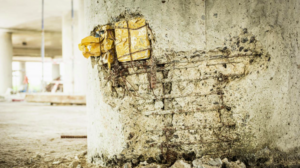
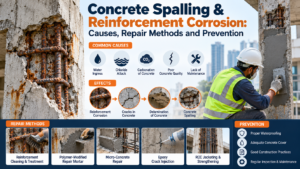
When moisture and other aggressive agents reach the embedded steel, corrosion can develop. The resulting expansive corrosion products may crack the surrounding concrete, cause delamination and eventually lead to spalling.
Common visible indicators include rust staining, longitudinal cracks along reinforcement, hollow-sounding concrete and exposed corroded steel.
2.3 Excessive Loading or Structural Movement
Buildings may experience distress when structural members are exposed to loading or movement beyond their intended design or service conditions.
Potential causes include:
- Unauthorised structural alterations
- Additional machinery or equipment loads
- Removal or modification of structural elements
- Changes in building occupancy or usage
- Excessive equipment vibration
Cracks caused by loading issues must be evaluated by a qualified structural engineer before repair.
2.4 Concrete Shrinkage and Temperature Changes
Concrete undergoes volume changes due to moisture loss, hydration and temperature variations. Where movement is restrained, cracking may occur.
These cracks are not necessarily signs of structural failure, but they may affect durability by allowing moisture penetration. Their significance depends on the affected member and service conditions.
2.5 Poor Construction Practices
Inadequate concrete compaction, insufficient curing, improper construction joints, reinforcement placement issues and material quality problems may contribute to cracking and premature deterioration.
An appropriate investigation is needed before attributing a particular crack to workmanship.
2.6 Water Leakage and Inadequate Waterproofing
Persistent leakage from terraces, bathrooms, external walls, basements and plumbing systems can accelerate concrete deterioration.
Long-term moisture ingress may contribute to reinforcement corrosion, resulting in cracking, delamination and spalling.
Repairing visible cracks without identifying and controlling the water-entry source can lead to repeated deterioration.
3. Types of Building Cracks and What They May Indicate
Hairline Cracks
Fine cracks commonly associated with plaster shrinkage, surface movement or temperature changes. Their location and progression should be reviewed before they are treated as cosmetic.
Diagonal Cracks
May develop from differential settlement, shear-related stress or movement around building openings. Diagonal cracking in beams, columns and load-bearing walls warrants particular attention.
Vertical Cracks
Can arise from shrinkage, restraint, corrosion, loading effects or movement. Their significance depends on the structural member and crack characteristics.
Horizontal Cracks
May be associated with reinforcement corrosion, structural movement, flexural effects or workmanship defects. Horizontal cracks in RCC members should be assessed professionally.
4. Warning Signs That Require Professional Attention
Certain building defects should never be ignored, especially when multiple symptoms appear together.
Important Building Distress Indicators
- Cracks that are visibly widening, lengthening or appearing suddenly.
- Diagonal cracks in RCC beams, columns or structural walls.
- Concrete spalling, falling fragments or exposed reinforcement.
- Visible sagging, deflection, tilting or separation of structural elements.
- Cracks accompanied by rust stains, persistent leakage or concrete deterioration.
- Cracks developing after nearby excavation, construction or structural alteration.
If a building shows sudden major cracking, significant movement, falling concrete or signs of possible collapse, occupants should move away from the affected area, restrict access and seek urgent assistance from a qualified structural engineer and the appropriate local authorities. Do not wait for a routine site inspection.
5. When Should You Call a Structural Engineer?
A qualified structural engineer should be consulted when cracks appear in load-bearing elements, grow over time, recur after previous repairs or are accompanied by other signs of structural distress.
A structural assessment may involve reviewing original building drawings, identifying load paths, examining crack patterns, evaluating repair history and recommending suitable investigations.
Depending on the findings, the engineer may advise crack monitoring, non-destructive testing, detailed structural analysis, temporary safety measures or permanent repairs.
For housing societies, the managing committee should also check applicable municipal requirements for structural audits and stability certification. Assessment and certification requirements are governed by the relevant local authority and must be verified for the specific building.
6. How Are Structural Cracks Inspected and Assessed?
- Initial Site Inspection: Examine accessible RCC members, walls, slabs, balconies and other affected areas to identify visible deterioration.
- Crack Mapping and Documentation: Record crack locations, dimensions, orientation and surrounding defects using photographs and inspection notes.
- Engineering Review: Review available drawings, structural details, loading changes, leakage history and previous repair records.
- Testing Where Required: An appointed structural engineer may recommend rebound hammer testing, ultrasonic pulse velocity, cover surveys, carbonation testing, corrosion assessment or concrete core testing, where appropriate.
- Repair Recommendations: Develop an appropriate repair or strengthening specification based on the established cause, assessment findings and approved engineering requirements.
These steps help distinguish cosmetic cracking from damage that requires more extensive investigation or intervention.
7. Common Structural Crack Repair Methods
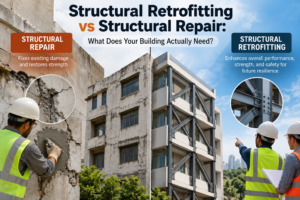
The correct repair technique depends on the cause and condition of the affected structural element. Simply filling or concealing cracks is not an adequate solution where the underlying cause remains active.
Epoxy Injection Grouting
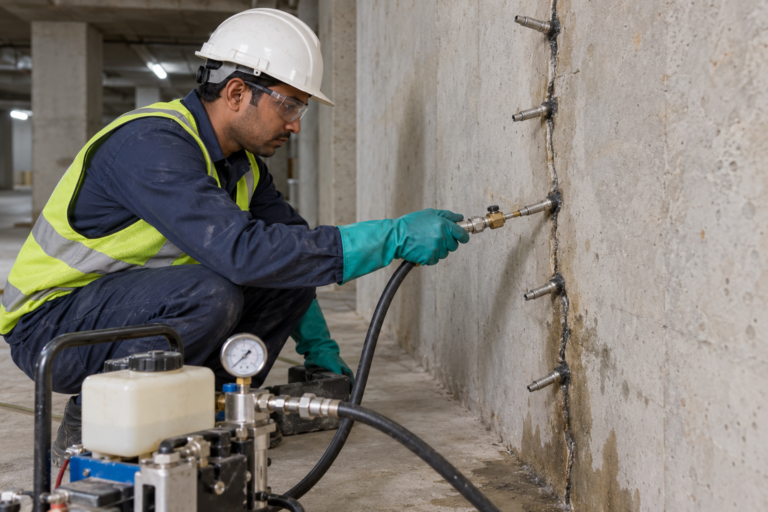
Epoxy injection may be specified for suitable dormant cracks in concrete where structural bonding or restoration of continuity is required. Its suitability depends on crack characteristics, moisture conditions and engineering requirements. It is not appropriate for every moving or leaking crack.
Polyurethane (PU) Injection Grouting
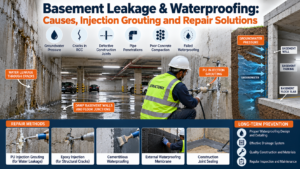
PU injection systems are commonly used to control water leakage through suitable cracks and joints. These systems are primarily selected for water sealing and should not be assumed to restore the structural capacity of cracked concrete.
Polymer-Modified Mortar Repairs
Compatible repair mortars may be used to restore damaged concrete surfaces, edges and sections after suitable substrate preparation and necessary reinforcement treatment.
RCC Jacketing
RCC jacketing involves adding reinforced concrete around an existing structural member to improve its performance, where supported by an engineered strengthening design.
Carbon Fibre Reinforced Polymer (CFRP) Strengthening
CFRP wrapping or bonding can provide additional strengthening to suitable members when designed and detailed by a competent structural engineer. Installation requires careful substrate preparation and quality control.
Waterproofing and Leakage Rectification
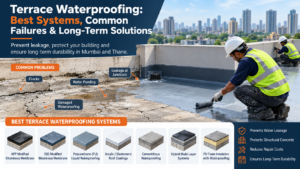
Where moisture ingress contributes to deterioration, waterproofing and drainage defects must be addressed alongside concrete repairs. A durable solution often involves a combination of structural repair, corrosion protection, waterproofing and preventive maintenance.
8. Why Ignoring Building Cracks Can Increase Repair Costs
Minor visible defects can develop into more extensive repair requirements if the underlying causes are not addressed.
For example, continued water ingress through a cracked concrete surface can contribute to reinforcement corrosion. As deterioration progresses, the repair scope may expand from local crack sealing to removal of unsound concrete, steel treatment, patch restoration and possibly structural strengthening.
Early investigation can help building owners and facility managers prioritise maintenance, plan budgets and reduce the likelihood of repeated repairs.
However, the extent and cost of work can only be determined after evaluating the actual condition of the structure.
9. Structural Crack Repair for Housing Societies and Industrial Buildings
Residential Buildings and Housing Societies
Common concerns include cracks around windows, balcony deterioration, damaged parking slabs, leakage-affected RCC members and external concrete spalling.
Housing societies benefit from a systematic approach involving structural assessment, prioritised repair recommendations, suitable contractor selection and documented quality control.
Industrial Buildings and Factories
Industrial buildings may experience deterioration associated with moisture, environmental exposure, vibration, equipment loads or changes to operational requirements.
Repairs within operating facilities often require additional planning for access, safety, equipment protection and reduced disruption.
Where structural strengthening is necessary, the repair works should follow approved engineering designs and specified execution procedures.
10. How Structonix Approaches Structural Crack Repair
At Structonix, we provide specialised structural repair, rehabilitation, concrete restoration and strengthening execution services for residential, commercial and industrial structures.
Our approach focuses on identifying visible distress, reviewing available engineering recommendations and implementing appropriate repair methodologies in accordance with project specifications.
Our Structural Repair Capabilities
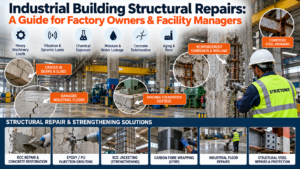
- Concrete crack repairs and compatible injection grouting systems
- Damaged concrete removal and restoration
- Reinforcement cleaning and corrosion treatment
- RCC jacketing and strengthening works
- CFRP wrapping and specialised strengthening systems
- Leakage rectification and waterproofing
- Industrial and commercial structural rehabilitation
Where structural design, stability assessment or certification is required, the work should be based on the findings and specifications of a qualified structural engineer.
We serve project requirements across Mumbai, Thane, Navi Mumbai and surrounding industrial areas of Maharashtra, subject to project location and scope.
11. Frequently Asked Questions
Are all cracks in buildings dangerous?
No. Some cracks result from plaster shrinkage, temperature movement or non-structural effects. Others may indicate structural movement or deterioration. The risk cannot be established from appearance alone.
How can I identify structural cracks in my house?
Look for cracks in RCC beams, columns, slabs or load-bearing walls, particularly where they are growing, recurring or accompanied by deformation, rust stains or spalling. A qualified structural engineer should determine their significance.
Can structural cracks be permanently repaired?
Many cracks can be repaired effectively after their underlying cause has been identified and addressed. The appropriate method depends on whether the crack is active or dormant, the affected material and any associated structural damage. No repair method guarantees that future cracking will never occur.
Is epoxy injection suitable for all concrete cracks?
No. Epoxy injection is generally used for selected cracks where structural bonding is required and conditions are suitable. Moving cracks, active leakage and deteriorated concrete may require different treatments.
When should a housing society arrange a structural inspection?
A society should seek professional evaluation when significant or recurring cracks, concrete spalling, corrosion, settlement or other distress is observed, and should also comply with applicable structural audit requirements.
Does Structonix undertake structural crack repairs in Mumbai and Thane?
Structonix offers structural repair, rehabilitation and strengthening execution services for suitable residential, commercial and industrial projects in Mumbai, Thane, Navi Mumbai and nearby service areas.